
Cauliflower buffalo wings have gone from novelty to staple—and for good reason. When done properly, they deliver everything people love about classic buffalo wings: crisp edges, tender bites, and that unmistakable tangy-spicy sauce that keeps you reaching back for more. They’re lighter than chicken wings, naturally vegetarian, and surprisingly satisfying when texture and timing are handled correctly.
This is not a soggy, sauce-soaked vegetable recipe. This is a technique-driven, oven-baked cauliflower buffalo wings guide designed to give you consistent crunch, real flavor, and restaurant-quality results at home.
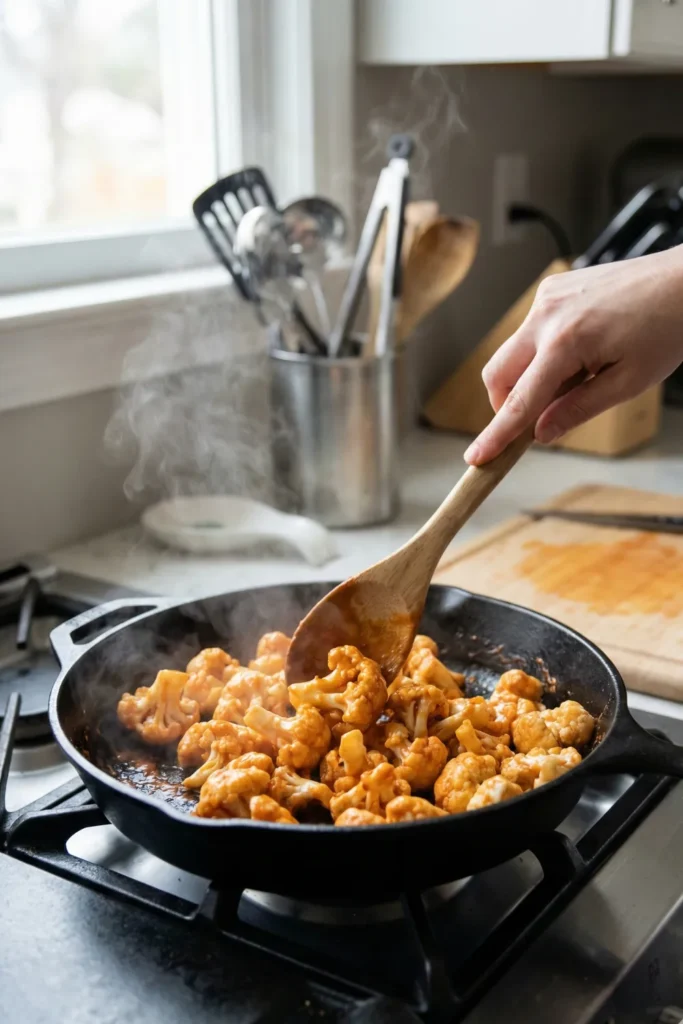
Why Cauliflower Is Ideal for Buffalo Wings
Cauliflower works because of its structure. The florets create natural ridges and pockets that hold batter and sauce, mimicking the surface area of traditional wings. When roasted at high heat, those edges caramelize while the inside stays tender.
Well-made cauliflower buffalo wings are:
-
Crisp on the outside
-
Tender but not mushy inside
-
Boldly flavored without heaviness
-
Perfect for dipping, sharing, or serving as a main
They’re not trying to be chicken—they’re delivering the buffalo experience in a different, lighter way.
Equipment You’ll Need
-
Large mixing bowl
-
Whisk
-
Baking sheet
-
Parchment paper
-
Wire rack (highly recommended)
-
Medium saucepan
-
Tongs or spatula
Ingredients List
For the Cauliflower Wings
-
Fresh cauliflower (cut into bite-size florets)
-
All-purpose flour
-
Cornstarch
-
Garlic powder
-
Onion powder
-
Smoked paprika
-
Salt
-
Black pepper
-
Water or unsweetened plant milk
For the Buffalo Sauce
-
Buffalo-style hot sauce
-
Melted butter or plant-based butter
-
Optional garlic powder
Timing and Servings
-
Prep Time: 15 minutes
-
Cook Time: 40–45 minutes
-
Total Time: About 1 hour
-
Servings: 4 (appetizer) or 2 (main)
How to Make Cauliflower Buffalo Wings
Step 1: Prep the Cauliflower
Cut cauliflower into evenly sized florets. Avoid very small pieces—they overcook and lose texture.
Preheat the oven to a high temperature and line a baking sheet with parchment. Place a wire rack on top if available to allow airflow underneath.
Step 2: Make the Batter
Whisk flour, cornstarch, garlic powder, onion powder, paprika, salt, and pepper. Slowly add liquid until the batter is smooth and pourable—thicker than milk but thinner than pancake batter.
Cornstarch is essential here. It lightens the coating and improves crispness.
Step 3: Coat and Arrange
Dip each floret into the batter, letting excess drip off. Arrange in a single layer with space between each piece.
Crowding traps steam and prevents browning.
Step 4: First Bake (Structure Stage)
Bake until the coating sets and begins to feel dry and lightly crisp on the outside. Flip halfway through for even cooking.
At this stage, the wings should hold their shape and feel firm, not soft.
Step 5: Prepare the Buffalo Sauce
Gently warm hot sauce and butter together until smooth. Do not boil. Taste and adjust heat if needed.
Step 6: Sauce and Final Bake
Remove cauliflower from the oven, toss lightly in buffalo sauce, then return to the oven for a final bake. This allows the sauce to cling and slightly caramelize without soaking the coating.
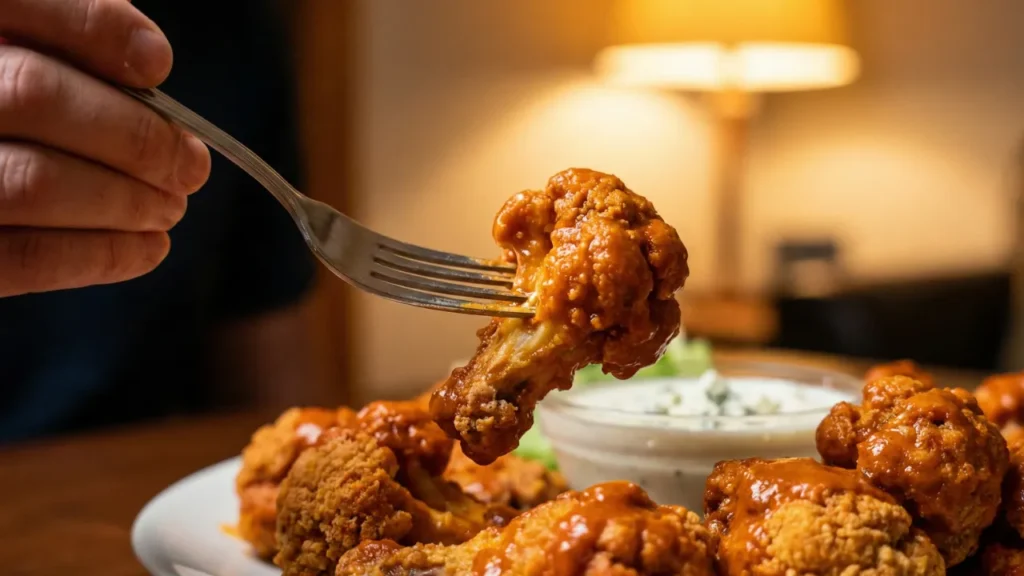
How to Keep Cauliflower Wings Crispy
-
Use a wire rack
-
Keep batter light
-
Bake hot, not low and slow
-
Add sauce after initial crisping
-
Serve immediately
Cauliflower wings are at their best fresh from the oven.
The Biggest Reason Cauliflower Wings Turn Out Soggy
Almost every failed batch comes down to moisture mismanagement.
Cauliflower releases a lot of water as it cooks. If that moisture gets trapped, the batter steams instead of crisps. This recipe avoids that by focusing on:
-
A light, structured batter
-
Proper spacing on the pan
-
Two-stage baking (before and after saucing)
Once you understand this, cauliflower wings become reliable instead of frustrating.
Baked vs Fried Cauliflower Buffalo Wings
While frying can work, baking delivers better consistency and is easier to manage for home cooks.
Why baking wins here:
-
Less oil and mess
-
More even browning
-
Easier batch cooking
-
Cleaner buffalo flavor
With the right batter and high heat, baked cauliflower wings crisp beautifully—no deep fryer required.
Flavor Variations
Once you master the base recipe, try:
-
Honey Buffalo: Add a touch of honey to the sauce
-
Extra Spicy: Add cayenne or chili paste
-
Garlic Buffalo: Finish with garlic oil or roasted garlic
Each variation keeps the same crisp foundation.
Serving Suggestions
Cauliflower buffalo wings pair well with:
-
Celery and carrot sticks
-
Ranch or blue cheese dressing
-
Simple green salads
-
Grain bowls or wraps
They work equally well as an appetizer or a main dish with sides.
Nutritional Facts (Approximate per Serving)
-
Calories: 230
-
Protein: 7 g
-
Fat: 12 g
-
Saturated Fat: 4 g
-
Carbohydrates: 24 g
-
Fiber: 4 g
-
Sugar: 3 g
-
Sodium: 620 mg
Values vary based on sauce, butter type, and portion size.
Common Mistakes to Avoid
-
Thick batter
-
Overcrowding the pan
-
Adding sauce too early
-
Baking at low temperatures
-
Letting wings sit before serving
Each of these impacts texture significantly.
If you’re craving something savory and simple, try Hot Honey Chicken Biscuits, Baked Lemon Garlic Chicken Wings, or Bacon Wrapped Jalapeño Poppers.

Ingredients
Equipment
Method
- Cut cauliflower into evenly sized florets. Avoid very small pieces—they overcook and lose texture.
- Preheat the oven to a high temperature and line a baking sheet with parchment. Place a wire rack on top if available to allow airflow underneath.
- Whisk flour, cornstarch, garlic powder, onion powder, paprika, salt, and pepper. Slowly add liquid until the batter is smooth and pourable—thicker than milk but thinner than pancake batter.
- Cornstarch is essential here. It lightens the coating and improves crispness.
- Dip each floret into the batter, letting excess drip off. Arrange in a single layer with space between each piece.
- Crowding traps steam and prevents browning.
- Bake until the coating sets and begins to feel dry and lightly crisp on the outside. Flip halfway through for even cooking.
- At this stage, the wings should hold their shape and feel firm, not soft.
- Gently warm hot sauce and butter together until smooth. Do not boil. Taste and adjust heat if needed.
- Remove cauliflower from the oven, toss lightly in buffalo sauce, then return to the oven for a final bake. This allows the sauce to cling and slightly caramelize without soaking the coating.
Conclusion
Cauliflower buffalo wings succeed when treated with intention. Managing moisture, building a light but structured coating, and timing the sauce correctly transforms cauliflower into something bold, crisp, and crave-worthy. This isn’t a compromise dish—it’s a standout recipe that earns its place next to classic wings.
Frequently Asked Questions
1. Are cauliflower buffalo wings vegan?
Yes, if you use plant-based butter.
2. Why are my wings soggy?
Usually from thick batter, crowding, or adding sauce too early.
3. Can I air fry these?
Yes, but bake first for structure, then air fry briefly.
4. Do they reheat well?
They’re best fresh, but oven reheating works better than microwaving.
5. Can I make them gluten-free?
Yes. Use a gluten-free flour blend with cornstarch.